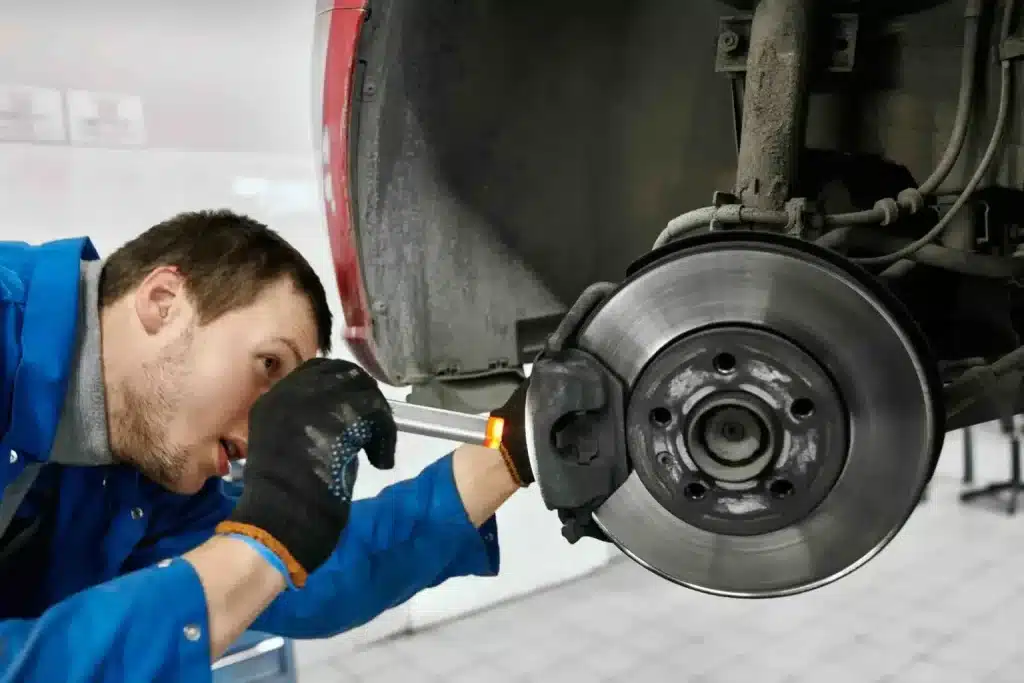
Essential Brake Maintenance Tips for Safe Driving – Your vehicle’s braking system is one of the most critical safety components on the road. Ignoring it can lead to serious accidents, costly repairs, or even total brake failure. That’s why understanding brake maintenance tips is essential for every driver.
- 1. Check Brake Pads Regularly
- 2. Pay Attention to Warning Signs
- 3. Maintain Proper Brake Fluid Levels
- 4. Avoid Hard Braking Whenever Possible
- 5. Inspect Brake Rotors
- 6. Keep Brakes Clean
- 7. Don’t Overload Your Vehicle
- 8. Get Regular Professional Inspections
- 9. Replace Worn Components Immediately
- 10. Drive Smart and Smooth
- Conclusion
- FAQ
Regular brake care not only ensures your safety but also improves vehicle performance and extends the lifespan of your braking system. Whether you’re commuting daily or planning long road trips, keeping your brakes in top condition should always be a priority.
In this guide, you’ll learn 10 practical and easy-to-follow tips that will help you maintain your brakes effectively and drive with confidence.
1. Check Brake Pads Regularly
Brake pads are designed to wear down over time because they absorb the friction needed to slow your vehicle. However, many drivers wait until they hear a loud grinding noise before taking action—by then, it’s already too late and can damage your rotors.
Ideally, you should visually inspect your brake pads every 10,000–15,000 km or during routine servicing. Most brake pads have built-in wear indicators that produce a high-pitched squeal when they are getting thin. If the pad thickness drops below 3 mm, replacement should be done immediately.
Driving with worn brake pads doesn’t just reduce stopping power—it increases stopping distance and puts extra stress on the entire braking system. Replacing pads early is a simple, low-cost step that prevents much more expensive repairs later.
Read Also : How to Get an ID Card in the United States (Step-by-Step Guide)
2. Pay Attention to Warning Signs
Your car will almost always give you warning signs before brake failure occurs. The problem is that many drivers ignore them or assume they are minor issues.
For example, a squealing sound often indicates worn brake pads, while a grinding noise may mean the pads are completely gone, and metal is rubbing against metal. Vibrations in the steering wheel or brake pedal can signal warped rotors, while a soft or spongy pedal may indicate air in the brake lines or a fluid issue.
If your car pulls to one side when braking, it could mean uneven brake wear or a stuck caliper. These are not small problems—they directly affect your ability to stop safely.
The key rule: if something feels different when braking, don’t ignore it. Early diagnosis can prevent accidents and save money.
Read Also : How to Defend Against Ransomware with Cloud Backup Solutions
3. Maintain Proper Brake Fluid Levels
Brake fluid plays a critical role in your vehicle’s hydraulic braking system. When you press the brake pedal, this fluid transfers force to the brake components at each wheel. Without it, your brakes simply won’t function properly.
Over time, brake fluid absorbs moisture from the air, which reduces its effectiveness and can lead to internal corrosion. That’s why checking your brake fluid level at least once a month is important.
Make sure the fluid is within the recommended range and appears clean. Dark or dirty fluid is a sign that it needs replacement. Most manufacturers recommend changing brake fluid every two years, but this may vary depending on driving conditions.
Using the correct type of brake fluid (such as DOT 3, DOT 4, or DOT 5) is also essential. Using the wrong type can damage your braking system and compromise safety.
Read Also : Common Water Heater Problems and How to Fix Them (Complete Homeowner’s Guide)
4. Avoid Hard Braking Whenever Possible
Frequent hard braking generates excessive heat, which accelerates wear on brake pads and rotors. Over time, this can lead to reduced braking performance and even brake fade during critical moments.
Instead of braking suddenly, try to anticipate traffic flow and road conditions. Maintain a safe following distance so you can slow down gradually rather than slamming on the brakes.
Smooth braking not only extends the lifespan of your brake components but also improves fuel efficiency and makes driving more comfortable. This is especially important in city driving, where stop-and-go traffic can quickly wear out your brakes if you’re not careful.
Read Also : 21 Safety Tips for Driving in Snow and Ice (A Complete Winter Driving Survival Guide)
5. Inspect Brake Rotors
Brake rotors work together with brake pads to create the friction needed to stop your car. However, they can become uneven, warped, or worn due to heat and pressure.
If you feel vibrations when braking, especially at higher speeds, it’s often a sign that the rotors are warped. You may also notice visible grooves or scoring marks on the rotor surface.
Regular inspection ensures that minor issues are addressed before they become major problems. In some cases, rotors can be resurfaced to restore a smooth finish. However, if they are too thin or severely damaged, replacement is necessary.
Healthy rotors are essential for smooth, consistent braking performance.
Read Also : 17 Exterior Car Care Tips That Actually Keep Your Car Looking Brand New for Years
6. Keep Brakes Clean
Brake components are constantly exposed to dust, dirt, and road debris. Over time, this buildup can reduce braking efficiency and cause uneven wear.
Regular car washing helps remove surface dirt, but deeper cleaning should be done during routine servicing. Brake dust, in particular, can accumulate quickly and affect performance if left unchecked.
Driving through deep water or mud can also impact your brakes. Water can temporarily reduce braking efficiency, while mud can stick to components and cause long-term issues.
Keeping your brakes clean ensures consistent performance and helps extend the lifespan of the entire system.
Read Also : 11 Easy Car Interior Cleaning Tips to Keep Your Car Fresh and Spotless
7. Don’t Overload Your Vehicle
Every vehicle has a maximum load capacity for a reason. Exceeding this limit puts additional strain on your braking system, forcing it to work harder to stop the vehicle.
The heavier your car, the longer it takes to stop. This not only increases brake wear but also raises the risk of accidents, especially in emergencies.
If you frequently carry heavy loads, your brakes will wear out faster than normal. Distributing weight evenly across the vehicle can help reduce unnecessary stress on specific brake components.
Always check your vehicle’s load limit and avoid pushing it beyond safe boundaries.
Read Also : 10 Best Construction Estimating Software in 2026
8. Get Regular Professional Inspections
Even if your brakes seem to be working fine, some issues are not visible or noticeable without proper inspection. That’s why professional brake checks are essential.
A qualified mechanic can examine the entire braking system, including pads, rotors, calipers, and fluid condition. They can identify early signs of wear, leaks, or damage that you might miss.
Scheduling a brake inspection every 6–12 months is a smart preventive measure. It ensures your braking system remains reliable and reduces the risk of unexpected failures.
Think of it as an investment in safety rather than an expense.
Read Also : Electric Cars vs Gasoline Cars: Which Is Right for You?
9. Replace Worn Components Immediately
Delaying brake repairs is one of the most common mistakes drivers make. What starts as a small issue can quickly turn into a major and costly problem.
For example, worn brake pads can damage rotors, turning a simple replacement into a more expensive repair. Similarly, ignoring fluid leaks can compromise the entire hydraulic system.
Replacing worn components as soon as they are identified helps maintain optimal performance and prevents further damage. It also ensures your vehicle remains safe to drive at all times.
When it comes to brakes, waiting is never worth the risk.
Read Also : 11 Ways to Use Less Electricity and Save Money
10. Drive Smart and Smooth
Your driving habits have a direct impact on how quickly your brakes wear out. Aggressive driving—such as speeding, tailgating, and sudden braking—puts unnecessary stress on the braking system.
On the other hand, smooth and controlled driving helps preserve brake components and improves overall safety. Using engine braking (downshifting in lower gears) can also reduce reliance on your brakes, especially on downhill roads.
Staying alert and planning your movements ahead of time allows you to brake more efficiently and avoid sudden stops.
In the long run, smart driving not only protects your brakes but also enhances your entire driving experience.
Read Also : 10 Easy Side Hustles from Home You Can Start to Earn Money Today
Conclusion
Maintaining your brakes is not optional—it’s essential for your safety and the safety of others on the road. By following these 10 essential brake maintenance tips for safe driving, you can prevent accidents, reduce repair costs, and extend the lifespan of your vehicle’s braking system.
Simple habits like regular inspections, smooth driving, and paying attention to warning signs can make a huge difference. Don’t wait for a problem to occur—take action now and keep your brakes in top condition.
FAQ
1. How often should I check my brakes?
You should check your brakes every 10,000–15,000 km or at least twice a year.
2. What is the most common sign of brake problems?
Squeaking or grinding noises are usually the first signs of worn brake pads.
3. How long do brake pads typically last?
Brake pads usually last between 30,000 and 70,000 km, depending on driving habits.
4. Is it safe to drive with worn brake pads?
No, it’s dangerous. Worn pads reduce stopping power and can damage other components.
5. How much does brake maintenance cost?
Costs vary, but regular maintenance is much cheaper than repairing major brake damage.